Showing posts with label Wi-Fi. Show all posts

Thursday, September 17, 2009

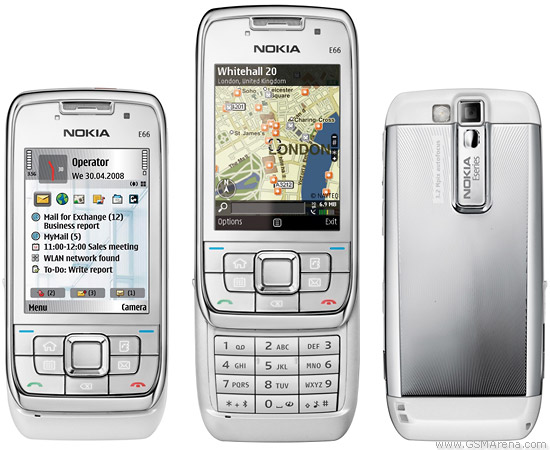
Nokia E66


It's been a while since mobile phones became an essential business tool and a huge number of devices are being specially designed for the purpose (not even mentioning the camera-free versions of some handsets). Nokia Eseries is almost a default name that comes to mind. Following a comprehensive review of Nokia E71, we are set to explore the other hot Eseries gadget. It's Nokia E66 with a priority appointment in our office. Refreshments served upon conclusion.


Key features:

-Quad-band GSM support
-3G with HSDPA 3.6Mbps
-2.4" 16M-color display of QVGA resolution
-Shortcut keys mean business
-Symbian 9.2 OS, S60 UI with FP1 (topped with some FP2 goodies)
-Accelerometer sensor for screen auto-rotation
-369 MHz ARM 11 CPU and 128 MB of SDRAM
-Wi-Fi
-Built-in GPS receiver, A-GPS
-3 megapixel auto focus camera with LED flash
-110 MB of internal memory, microSD expansion, ships with a 2GB card
-Comfortable keypad
-Compact body (62.6cc only)
-Stainless steel casing
-Standard 2.5mm audio jack
-Bluetooth v2.0 with A2DP
-microUSB v2.0
-FM radio
-Infrared port
-Great battery life
-Good retail package
-Nokia Maps comes with three months free turn-by-turn navigation license


Main disadvantages:

-Average camera performance
-Video recording maxes out at QVGA@15fps
-No camera geotagging
-Cheap-looking power key
-Office document editing not available
-No RDS in radio


Final words

To begin with the upgrader's point of view, we'd say a jump from E65 to the E66 is totally worth it. The phone has improved in nearly every area compared to its predecessor and addresses most of its issues. The price tag is still slightly on the steep side but we guess it will be a great bargain in no time. And even as it stands now, the Nokia E66 still is a great purchase.

Monday, June 1, 2009

Nokia E71


Following some time off since the E51, the Nokia E-series is back to the shop with a new pet for business-minded users. Nokia E71 seems to have it all to take over and build on the E61 QWERTY messengers' expertise. The suave upgrade is much slimmer now (and thus much more pocket-friendly), more powerful and a whole lot more skilled. The smaller display is actually the only step down. Well, we're back in business too, and we're about to see if that's the step back before a major leap forward


Key features:

-Quad-band GSM support
-3G with HSDPA 3.6Mbps support
-Landscape 2.36" 16M color display of QVGA resolution
-Comfortable full QWERTY keypad
-Convenient business-minded shortcut keys
-Symbian 9.2 OS, S60 UI with FP1 (topped with some FP2 goodies)
-369 MHz ARM 11 CPU and 128 MB of SDRAM
-Wi-Fi
-Built-in GPS receiver, A-GPS
-3.15 megapixel auto focus camera with LED flash
-110 MB of internal memory, microSD expansion, ships with a 2GB card
-Slimmest smartphone to-date, slimmest Wi-Fi and/or GPS handset to-date
-Stainless steel casing
-Standard 2.5mm audio jack
-Bluetooth v2.0 with A2DP support
-microUSB v2.0
-FM radio
-Remote Wipe
-Provider-independent VoIP support
-Infrared port
-Great battery life
-Office document editor
-User-friendly Mode Switch for swapping two homescreen setups
-Rich retail package


Main disadvantages:

-Below average camera performance
-Video recording maxes out at QVGA@15fps
-No dedicated camera key
-Smaller display than its predecessor
-Cheap-looking power key
-No RDS for the FM radio


Conclusion

Nokia E71 is a powerful business tool - in fact it is one of the most capable we've ever seen. Plus, it has completed the demanding task of adding style and slick looks to the QWERTY messenger breed. The performance of Nokia E71 is praiseworthy, save for the below-par camera.

Samsung i550/i550w


Fascinating as they are, ultra high-end handsets are not everybody's cup of tea. In fact, the good old mid-range is the bread and butter for every successful mobile phone company, for that's what gets those sales numbers right. As we see it, Samsung i550 might just be the phone to perfectly fit this description. It doesn't yell expensive out loud, but has great all-round functionality and might just become tomorrow's classic.


Key features:

-2.6" 262K-color TFT display of QVGA resolution
-3G with HSDPA
-Trackball navigation
-Built-in GPS receiver
-Symbian OS with S60 user interface
-Wi-Fi (Samsung i550w only)
-3 megapixel camera with auto focus
-MicroSD card slot
-3.5mm stereo audio jack
-FM radio
-Decent battery life
-Bluetooth with A2DP support


Main disadvantages:

-Tri-band GSM support only
-Trackball is somewhat slow
-No two-step shutter key
-No Wi-Fi (Samsung i550)
-A bit too conservative looks
-Video recoding limited to QVGA resolution
-Awkward soft key layout
-No RDS


Final words

Samsung i550 is a very capable device by all means. It blends a great bunch of features with the power of Symbian and the S60 user interface. The combination works out quite well and the result is a phone of great potential.

Wednesday, May 27, 2009

Samsung F110 Adidas


Samsung F110 is not revolutionary. And no, it's not a high-end gadget either. But it's part of a unique workout system developed by Adidas. The Adidas miCoach system makes your phone a full-fledged workout sidekick recording each of your steps and guiding you along your sports endeavors while playing your favorite music to make sweating a bit more pleasant.


Key features:

-Dedicated sports features:
-On-board miCoach application measuring sports progress and giving voice feedback
-Synchronization with miCoach web-based coaching system
-Built-in accelerometer with step counter
-Stride sensor and heart rate sensor in the extended package
-Comes with sports headset, 3.5mm audio jack remote and an armband
-2 megapixel camera
-1GB of onboard storage
-FM radio
-Stereo Bluetooth
-Works without a SIM card inserted


Main disadvantages:

-Boring design
-Camera has no autofocus
-Poor display resolution and poor sunlight legibility
-Built-in step counter is really inaccurate
-No memory card slot
-No 3G
-No office documents viewer


Final words

When compared to the existing digital sports systems such as the Nike+, the Adidas miCoach phone has a number of strong points - the heart-rate monitor, the free choice of running shoes, the mobile phone functionality, the "double-tap-to-get-stats" feature, and the FM radio. However, the iPod nano used by Nike has larger storage space, higher resolution display, better sunlight legibility and it's more compact.

Successful or not, the Samsung F110 Adidas phone will remain a niche phone and you are unlikely to see much of it on phone-shop windows.

Samsung i620


We have seen lots of phones from Samsung with slider form factor but this time it's a full hardware keyboard that is revealed when you slide the Samsung i620 out - the new mid-range smartphone running on the Windows Mobile 6 Standard edition. Packed with some exclusive features - a rotating D-pad wheel and sensor keys all over, you might as well be blown away by the one-off snowy white color too. So, it's compact, it's QWERTY, it's smartphone - yes this is really an offer you can't resist to play with - and neither do we. So grab yourselves something to drink and join us on this Samsung i620 review.


Key Features

-Windows Mobile smartphone
-Novel design and unusual form factor
-Compact dimensions
-2.2" TFT display
-Tri-band GSM/GPRS/EDGE and HSDPA, 1.8 Mbps
-Rotating wheel and sensor front panel keys
-Full hardware QWERTY keyboard with sufficient backlight
-Bluetooth v2.0 with A2DP
-2 megapixel camera
-microSD card slot


Main disadvantages

-Landscape orientation is not common for applications
-No Wi-Fi
-No autofocus, mediocre camera performance
-TI OMAP 200 MHz processor struggles at times
-QWERTY keyboard has little tactile feedback
-Only 34MB storage memory available to the user


Conclusion

Samsung i620 is a stylish (to some!), neat and relatively compact slider phone, plus it runs on Windows Mobile 6 Standard. The full QWERTY hardware keyboard brings even more functionality to the smartphone. The sensor keys and the useful D-pad wheel help a lot when dealing with the address book, the menus and especially with the gallery images.

In the end - it all boils down to this: the Samsung i620 doesn't offer high-end features but offers excellent implementation of the features that are currently on-board. As such it will have a really hard time coping with Symbian bullies out there.

Sony Ericsson W760


Sony Ericsson W760 made a name for being the first Sony Ericson phone to offer an integrated GPS receiver. With a large QVGA display, stereo speakers, Media Center and the 3 megapixel camera on top, the W760 packs a nice punch. It's an exciting slider that may look no-thrills on the outside, but has all the prospects of becoming a bestseller.


Key features

-Quad-band GSM support
-Tri-band HSDPA
-Built-in GPS receiver
-3 megapixel camera with geotagging
-Walkman player with Shake control and SensMe
-Media center
-Stereo speakers
-FM radio with RDS
-YouTube integration
-2.2" QVGA TFT display
-M2 memory card slot (1GB card included)
-Stereo Bluetooth
-Built-in motion sensor


Main disadvantages

-No video-call camera
-Camera has basic portrait interface and no autofocus
-Poor legibility under direct sunlight
-Integrated stereo speakers are not impressive neither in sound qiality, nor in loudness


Final words

Sony Ericsson W760 is a nice attempt at creating an all-purpose slider. It's got all the goodies many users are waiting for.

Although in dense urban environments our beta unit had a weakish GPS sensitivity, the amount of GPS applications is commendable - especially for a first try from Sony Ericsson.

Saturday, May 23, 2009

Samsung G810


The announcement of Samsung G810 must have had many a geek's heart skip a few beats. The handset has all but the kitchen sink and there's Symbian under the hood.


Key features

-5 megapixel camera with auto focus and 3x optical zoom
-Symbian OS with S60 user interface
-2.6" 256K-color TFT LCD display with QVGA resolution
-Wi-Fi
-Built-in GPS receiver
-3G capabilities with HSDPA support
-Xenon flash
-330MHz TI OMAP processor
-130MB of internal memory plus a microSD card slot
-3.5 mm stereo audio jack
-Bluetooth and USB v2.0
-TV-out functionality
-Great metallic design


Main disadvantages

-Large size
-Awkward keypad
-Tri-band only
-Poor sunlight legibility
-Xenon flash is disappointing
-Optical zoom reduces picture quality noticeably


Final words

To begin with, it is quite obvious that Samsung are a bit late releasing the G810.
Samsung G810 has a unique optical zoom feature and is probably the sleekest looking among them all-but-the-kitchen-sink devices out there. It has the performance and snappy user interface, which is probably what's most important in such a phone.

Saturday, May 16, 2009

BlackBerry Storm


Introduction:
What’s this, the new BlackBerry? Woah, it has no keyboard. And…did it just click? You’ve never clicked a screen before, is that supposed to happen? Is it supposed to feel so…tiring? And why is this screen wiggling around, am I supposed to be seeing the circuit board? Why is it so heavy; the iPhone isn’t this heavy? The interface is pretty neat, but why are page transitions taking so long. Did it just flip orientations on me? I didn’t even move it. Wait, now I did move it and the orientation isn’t following. What’s going on, I thought this was supposed to be an iPhone killer? This is what Verizon is putting their muscle behind? Really?


Design:
The first thing you notice is how heavy the Storm is. It’s nearly an ounce heavier than the iPhone and Bold, and a full ounce and a half heavier than the Diamond and Curve. We appreciate heft for the sake of quality, and in fact have taken some criticism for knocking devices that are too light, but the Storm is just plain heavy. It’s also wide; its 2mm narrower than the iPhone, but 6, 9 and 12mm wider than the Curve, Dare and Diamond, respectively. The 3.2” display makes it tall, but it’s a full 7mm taller than the Instinct which also has a 3.2” screen.


Performance:
Voice quality was very good on the Storm, as was battery life. On our end callers were clear and voices sounded natural. Callers said we were a touch hollow, but that overall we sounded very good and gave us an 8.5/10 rating. The in-call screen is new, with large icons for Speaker, Mute, Flash and Add Participant. Along the bottom the user can access the Keyboard, Notes, Home Screen, Calendar and their Contact list. Our only complaint is that when the phone was resting against our face we often activated the mute button, which is obviously problematic.


Conclusion:
The Storm sets very lofty goals, but misses the mark on many of them and in the process loses its way. At its core a BlackBerry should be a top notch messaging device, which has always allowed us to look past other shortcomings. Not so with the Storm, as the flaws greatly outweigh the benefits. The phone performance is top notch and the Storm is a great media device, but beyond that there isn't much to like. RIM has already addressed software issues and we applaud their swiftness, but we feel that the hardware is a limiting factor with the Storm. The size and weight are awkward, and we can't believe we're saying this but we miss the trackball. The screen play is disconcerting, and we just aren't buying the clickable screen. But most importantly typing is a workout and even worse inaccurate, and without that a BlackBerry just isn't a BlackBerry.

Samsung S7330


Introduction:
We have previously discussed the popular strategy to use the design of a high-end phone for the production of a cheaper model of the same brand. Samsung’s L770 copying the U700 Ultra 12.1 is a typical example of that. But now again, the Koreans have decided to use that trick and the result is S7330, resembling the Soul. The phone is equipped with a 3-megapixel camera, FM radio, microSD slot and a touch-sensitive navigational pad.


Design:
The S7330’s design reminds us of the Soul, but it lacks style and class, which in the high-end model are achieved by the use of quality material. Although it looks metal, only the battery lid is made of that material and the rest is plastic. Nevertheless, the phone is quite massive and heavy.


Interface:
There’s nothing surprising here, especially after we’ve become familiar with the Soul line and most models of the manufacturer. Only small additions to the touch sensitive pad are present. You are now able to store your own themes and even select ones with color “arrows” (figuratively speaking; if we look at it as a D-pad).Unfortunately, you won’t be able to create such a colorful theme and will have to be satisfied with the monochrome ones. Pressing the central part of the pad when at the homescreen now opens a shortcut menu with 12 positions, which can lead to a group of options from the main menu (e.g. settings) and/or to features one step below them (e.g. display settings).


On the right side, you will find the camera shutter and the microSD slot, and on the opposite you’ll see the volume rocker and the charger connector. We think that it’s time for Samsung to join the microUSB party.

Sony Ericsson W980


Introduction:
‘I want a phone which I can listen to music by without compromise!’ - if this thought keeps running in your head, then look here before you go shopping. W980 is one of the latest models in Sony Ericsson’s Walkman series and may just be the perfect fit for you. It belongs to the high class and is Sony’s first device with an FM transmitter, by which you can play music on radio-receivers near you. Like the W960 before it, the W980 offers 8 GB of internal memory.


Design:
The overall appearance of the W980 is quite atypical compared to other Sony offerings. Taking the role of fashion experts of Armani and Ferre’s rank (we are joking), we define it as a combination of retro elements and extravagant charm. We last saw it in the budgeted Z555 which is also made of plastic like this one. However, the material here gives a cheap feel; unbecoming for a high-class phone.


Performance:
Sony Ericsson W980 does not work as fast as some of the Symbian smart-phones, but we are happy that there are no annoying delays when browsing the menus.The sound quality when talking disappointed us. The voice we hear is very unrealistic, robotized and monotonous, accompanied by unpleasant crackling all the time. As a whole, you will have problems with the understanding and you will have to ask to have things repeated even several times. The opposite situation is much better. The sound is monotonous and quite sharp, but is realistic and strong. We are disappointed because understanding what you hear with great difficulties while you are being heard well makes no sense at all.


Conclusion:
Our first experience with W980 impressed us in an unexpected way maybe because most of the time we used headphones while listening to the music. The next day revealed the naked truth. The Walkman is a high class phone but it somehow does not match up with its price. Its materials give the ‘cheap’ feel and the single-hand opening could turn into a real struggle. In addition, the calling could be described as an unpleasant experience and the speakers are even worse than the ones you’d find in a low-end music phone.

Wednesday, May 6, 2009

Nokia N85


Introduction:
If you’re a Symbian fan most likely the Nokia N96 represents the best you can get. It is not without it’s flaws however, like the weak battery and the DVB-H tuner which is usable only in a few countries. The phone is very good but not perfect, and if you find yourself wanting just a bit more then the N85 may be the phone for you. It is the first of Nokia’s N-series equipped with a power-saving OLED display. In addition to helping the battery, it doesn’t fade away in direct sunlight and offers a brighter picture. It’s hard to figure out whose successor is the N85 by just looking at the company’s product line. It is supposed to be a lighter version of N96, but at the same time offers upgrades such as a better display and battery performance; it is almost as if the N85 is an updated version of the N95...


Design:
The N85 reminds us of the N95/N96 – it’s a dual slider featuring four multimedia buttons which are revealed when the phone is open. The device carries the new ideas for the design of the N-series.
The back panel is in a cream-colored tone, while the front one is entirely black. N85 fits well in a hand no matter the mode you are using it in (portrait/landscape) and is perfectly balanced. In a pocket, the N85 feels slightly thick, but not large or heavy.


Performance:
It may be an all-in-one multimedia device, but is the N85 still a good phone? Fortunately, Nokia has not overlooked this all-important aspect. The sound quality during a call is really high-level and we got the feeling that we were communicating face to face. We were fascinated by the deepness of the sound, and the side noises were almost unnoticeable. They could also hear us loud and clear at the other end of the line, but without the same “Wow!” effect.


Conclusion:
On the whole we are quite disappointed by the N85 due the total lack of new features. It’s not a bad phone, but there are no innovations compared to previous models. The OLED display is indeed good, unless it’s exposed to direct sunlight. The poor video support means you won’t be able to watch high-quality clips or even movies. In all other aspects the N85 isn’t innovative, but it’s just fine – a smartphone with a nice browser, satisfying audio performance and camera.

Samsung B2700


Introduction:
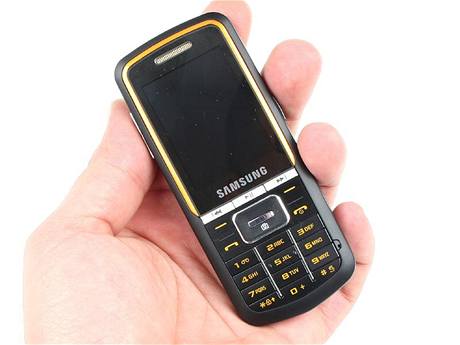
Phones resistant to impact, dust and water are rarely found on the market so the release of such a model by Samsung deserves a small celebration. B2700 is made to survive. It has a protection class IP54 (meaning that is dust and splash resistant) and is equipped with a compass, pedometer, altimeter and a flashlight.


Design:
B2700’s design is nothing special, but that’s not a surprise, considering that the model has been created to work in rough conditions. Its entire body is rubber-coated, quite thick and relatively heavy.


It has a low resolution (176x220) TFT display, supporting 262k colors. Over it is located the camera for video calls, and below it are all navigational and soft buttons, accompanied by the keyboard.


Interface:
B2700’s software doesn’t offer any great extras, but offers everything a phone from this class should. That includes theme creator, user-friendly phonebook (no second name search), e-mail with automatic settings support and multiple organizing functions (calendar, alarms, World clock, tasks etc.). The only additional features are the pedometer and the compass, which is equipped with altimeter as well. Calibrating it is a strange process (you have to rotate the device as shown on the display) and we didn’t think it was very precise. We will share our detailed opinion with you in the review of a final unit.

Samsung BEATb


Introduction:
Not long ago, Samsung announced the slider BEATs and the candybar BEATb, which are the first two models of the music oriented line “BEAT edition”. It will try to be direct competition of Sony Ericsson’s Walkman series and Nokia’s XpressMusic. In this preview, we’ll discuss Samsung BEATb, which will be a rival to Nokia 5310 XpressMusic.


Same as BEATs, this model is equipped with Samsung’s DNSe DSP and Auto EQ. These technologies are provided in order to enhance the music sound quality. The phone also comes with Shazam’s Find Music track recognition software and the function Motion Play. In contrast to the slider however, here we don’t have the Bang&Olufsen amplifier.


Design:
BEATb’s design is a bit more stylish and not that youthful as of 5310, and we like it. Its size and weight are very close to the rival’s, which makes the Samsung very compact as well.

The 2” QVGA display supports up to 16 million colors and we hope it will be as good as the Nokia’. Below it are located the three buttons controlling the musical player and the radio accompanied by the navigational keys and the numeric keyboard.


Software:
When we are talking about the software of a non-smartphone by Samsung, there rarely are any huge differences compared to the one of previous models. BEATb is not an exception and you’ll also have menu transition like in Soulb for example. However, the nice theme creating option is not present here. Since BEATb is music-oriented we’ll discuss the music options.
 

blogger templates | Make Money Online