Wednesday, May 6, 2009

Samsung BEATb


Introduction:
Not long ago, Samsung announced the slider BEATs and the candybar BEATb, which are the first two models of the music oriented line “BEAT edition”. It will try to be direct competition of Sony Ericsson’s Walkman series and Nokia’s XpressMusic. In this preview, we’ll discuss Samsung BEATb, which will be a rival to Nokia 5310 XpressMusic.
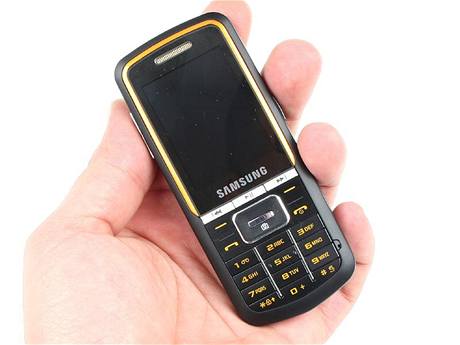


Same as BEATs, this model is equipped with Samsung’s DNSe DSP and Auto EQ. These technologies are provided in order to enhance the music sound quality. The phone also comes with Shazam’s Find Music track recognition software and the function Motion Play. In contrast to the slider however, here we don’t have the Bang&Olufsen amplifier.


Design:
BEATb’s design is a bit more stylish and not that youthful as of 5310, and we like it. Its size and weight are very close to the rival’s, which makes the Samsung very compact as well.

The 2” QVGA display supports up to 16 million colors and we hope it will be as good as the Nokia’. Below it are located the three buttons controlling the musical player and the radio accompanied by the navigational keys and the numeric keyboard.


Software:
When we are talking about the software of a non-smartphone by Samsung, there rarely are any huge differences compared to the one of previous models. BEATb is not an exception and you’ll also have menu transition like in Soulb for example. However, the nice theme creating option is not present here. Since BEATb is music-oriented we’ll discuss the music options.

Samsung BEATs


Introduction:
After the introductions of Nokia’s XpressMusic and Sony Ericsson’s Walkman, Samsung finally decided to release a line of music-oriented phones. It is called BEAT Edition and the slider BEATs is one of its first two models. The phone is equipped with quite some extras in order to provide quality sound – support for Samsung’s DNSe DSP technology, ICEpower amplifier by Bang & Olufsen.


Design:
The phone has a rather nice vision, mainly thanks to the colors and the metal front panel. Despite being somewhat thick, the device is not very heavy and the curvy shapes are easy to the touch.


BEATs has a display with QVGA resolution and supports up to 26k colors, and right below it, we see the buttons controlling the musical player. Together with the two functional buttons and the D-pad, they are one of the few things on the upper slider.


Interface:
BEATs is equipped with rather nice software, similar to the ones seen in all other mid-range non-smart Samsungs. The only options, which are not that often seen are the one to change the menu transition and the accelerometer controlled games.

Friday, May 1, 2009

Sony Ericsson C905


Introduction:
In June, Sony Ericsson raised the bar for cameraphones announcing the first 8-megapixel phone intended for the European market - C905. A few months later, it just comes to the market, left behind the competition; Samsung already launched the INNOV8 and Pixon and LG offers its Renoir. The Cyber-shot model wasn’t first to hit the market, but it still might be the best so far. Although it is touted to be a “real camera rival”, the C905 has yet to prove that. The key characteristics in this aspect are a camera-like design, Xenon flash, face recognition, and picture tagging, thanks to the built-in GPS. C905 is the first non-smartphone of the manufacturer with an integrated Wi-Fi support, which can be used for Internet access and DLNA-compatible devices (e.g. to view pictures on DLNA-capable TV wirelessly).


Design:
As Sony Ericsson claims, C905’s design really reminds us of the pocket digital cameras. That’s traditional for the manufacturer, but this model is the best so far in this aspect. It resembles a camera from all sides. It has the same dimensions and weight as a pocket camera, which definitely makes it ineligible to be called a small phone. However, this is no surprise for such a pretentious functionality-wise model.


Performance:
Sony Ericsson C905 is a good camera, but the word cameraphone reminds us that it’s a phone as well. Luckily, the model performs well as such and we have no major remarks. The sound is good although we were told that our voice was somewhat sharp and monotonous. We were a little worried about the incoming sound not being loud enough, but the quality is fine in both directions.

As usual, Sony Ericsson indicates a very good battery life for its model. It claims that the phone will be operational for up to 9 hours of talks or 16 days in standby before recharging.


Conclusion:
It’s not easy to create a high-class phone in 2008. Being just a good cameraphone is not enough, and the device has to excel in all aspects. The C905’s competition consists of three good all-in-one models. They not only make good pictures, but are able to do everything, besides cooking.

Nokia 8800 Carbon Arte


Introduction:
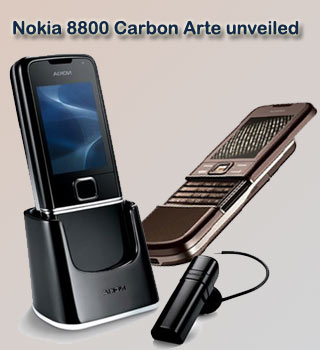
Did you see the word “Arte” in the title? You did? Does it ring a bell?That is the name of the most expensive product in the Nokia catalogue – the only major company on the market that offers such exquisite models. The 8800 series of the Finnish phone maker is close to the lines of manufacturers like Vertu and Gresso, which offer even more luxurious phones. The rest is “rabble”, fighting for characteristics. On top remains the sensation aroused by expensive materials and refined design.


Design:
As we’ve already mentioned, the only thing that has suffered visible changes is the appearance. Despite the phone having the same shape and size, the new materials give it a totally new face.

Adding carbon fiber is a very good idea, because in contrast to LG Secret, it goes well with the titanium and the stainless steel. Arte still is a “tough guy” with its 150 grams. Similarly to Vertu, the body is well balanced for a good grip.


Performance:
Imagine getting in to the VIP and flashing your Carbon Arte… not being able to hear a single word. Luckily this won’t happen, because although not perfect, the sound during a call is very good at both ends of the line. Only at your end of the line voices will sound somewhat monotonous but clear. Do not forget that you can stop the ringing by just putting the phone face down. That’s a nice extra especially if executed in the proper manner.


Conclusion:
Got money... And you know it... Take it out your pocket and show it... Throw it... This a way... That a way... This a way... oops, we got carried away!

One more time – Carbon Arte is more of the same. It has a nice, slightly different design, which only widens the audience of potential clients for Nokia. If you like Carbon Arte, you should definitely purchase it. It is worth having and will help you demonstrate class before the crowd.

Motorola ZINE ZN5


Introduction:
Now that we are firmly entrenched in the 8-megapixel era, Motorola has finally managed to release its first 5-megapixel phone, the ZINE ZN5. It comes two years later than the competition but it looks promising due to its Xenon flash, the “KODAK Imaging Technology with optimized settings for low-light environments” and the Kodak Perfect Touch software. Moreover it is touted for the quickness with which it opens and shoots pictures and the presence of the Kodak Gallery application for sharing pictures online.


Design:
The ZN5’s design is elegant, modern and with the typical for Motorola oblique bottom. Here, it is rubber-coated to prevent the phone from sliding and along with the rest of the materials it makes for a quality feel. Despite not being slim and light as Sony Ericsson C902 for example, the device still feels comfortable in your pocket.


Performance:
The ZINE ZN5 is relatively quick to operate, but it’s not as good as the leaders on the market. There’s a light lag when opening menus and applications, but most people won’t be bothered by it.

We were very happy with the call quality; and the voices at both ends are loud and clear. Only the monotony and the light sharpness were somewhat annoying. In terms of the loudspeaker, we think that its performance is above the average.


Conclusion:
Motorola enters the cameraphone market late, but better late than never and it did not disappoint us. The ZINE ZN5 has a modern design, it’s suitable for listening to music and has a very fast camera, which takes very good pictures if the sun is shining. Unfortunately, the story changes on cloudy days and indoors and the Xenon is only useful if taking a picture of an object at 7 feet at the most.

LG Renoir


Introduction:
Have you ever thought about how the touch phones came in style? Many consider the iPhone as the revolutionary model of this new movement, but LG rightly reminds us that their PRADA came along before the iPhone was introduced Today, we’ll take a look at the Renoir KC910, which is the latest entry in LG’s touchscreen lineup. Successor to the Viewty, the Renoir is a powerful multimedia device with a top-notch camera, hence named after the famous French artist. In addition to the high-quality video DivX codec, we now have XviD support. The features now include Wi-Fi and GPS as well.


Design:
This particular design attracts peoples’ attention; the consumer is still fascinated with the very idea of a keyless device which is relatively new and reminds us of a futuristic movie. Design wise, the Renoir will not have as many followers as the PRADA and Giorgio Armani, but it will be an appetizing bite nevertheless. The “glass” face, the shiny sides and the jagged back which is made of miniature circles make it a much more attractive device than Samsung’s Pixon. You can feel those circles by running a finger across the surface and that pattern adds an interesting light reflecting effect to the phone. The only thing we are not happy with is its weight. The Renoir doesn’t feel too solid in a hand, making it appear cheap. On the other hand, this is very nice when you carry it in your pocket


Performance:
The Renoir has rich multimedia functionality but it is a phone after all, and we were happy with its above average performance as such. The sound at both ends of the line is loud enough, and despite being slightly muffled, the voices are realistic and clear. The speakerphone, however, is totally useless even in a quiet room.

We weren’t very impressed with the operating speed of the device. As we mentioned before, the menu transitions should have been faster and there were a few “choppy” moments as well. We even had the same experience with the original LG games, which means that the Renoir hasn’t been fully optimized. Additional lag can be noticed when opening the gallery or sorting tracks in the music player. Overall, not the best we’ve seen.


Conclusion:
LG’s Renoir KC910 is a good model, but it worth it? We would have to say it is not. The 8-megapixel camera and the rich functionality would be really attractive to the consumer if there was no competition in the class. However, in the world we are living in the mobile industry is characterized by dynamic development in all aspects and we all know that only the best live to see another day.
 

blogger templates | Make Money Online