Thursday, September 17, 2009

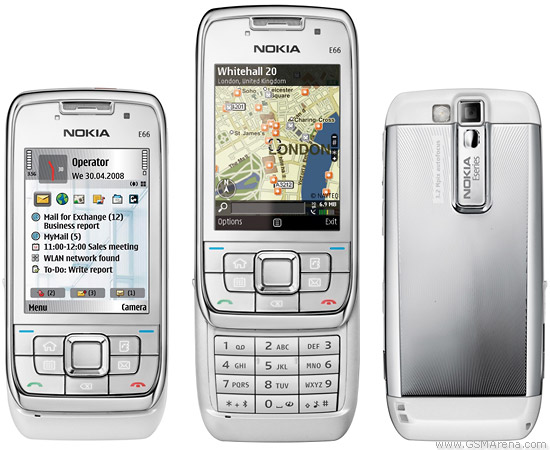
Nokia E66


It's been a while since mobile phones became an essential business tool and a huge number of devices are being specially designed for the purpose (not even mentioning the camera-free versions of some handsets). Nokia Eseries is almost a default name that comes to mind. Following a comprehensive review of Nokia E71, we are set to explore the other hot Eseries gadget. It's Nokia E66 with a priority appointment in our office. Refreshments served upon conclusion.


Key features:

-Quad-band GSM support
-3G with HSDPA 3.6Mbps
-2.4" 16M-color display of QVGA resolution
-Shortcut keys mean business
-Symbian 9.2 OS, S60 UI with FP1 (topped with some FP2 goodies)
-Accelerometer sensor for screen auto-rotation
-369 MHz ARM 11 CPU and 128 MB of SDRAM
-Wi-Fi
-Built-in GPS receiver, A-GPS
-3 megapixel auto focus camera with LED flash
-110 MB of internal memory, microSD expansion, ships with a 2GB card
-Comfortable keypad
-Compact body (62.6cc only)
-Stainless steel casing
-Standard 2.5mm audio jack
-Bluetooth v2.0 with A2DP
-microUSB v2.0
-FM radio
-Infrared port
-Great battery life
-Good retail package
-Nokia Maps comes with three months free turn-by-turn navigation license


Main disadvantages:

-Average camera performance
-Video recording maxes out at QVGA@15fps
-No camera geotagging
-Cheap-looking power key
-Office document editing not available
-No RDS in radio


Final words

To begin with the upgrader's point of view, we'd say a jump from E65 to the E66 is totally worth it. The phone has improved in nearly every area compared to its predecessor and addresses most of its issues. The price tag is still slightly on the steep side but we guess it will be a great bargain in no time. And even as it stands now, the Nokia E66 still is a great purchase.

iPhone


It's finally here - the iPhone 3G. No, we mean that literally. It's finally at our office and boy, are we excited! GPS, HSDPA purring under the new iPhone hood with a hefty number of software enhancements.


Key features:

-3.5" 16M-color TFT display with a resolution of 480 x 320 pixels
-Quad-band GSM support
-Tri-band UMTS support with HSDPA
-Built-in GPS receiver
-Wi-Fi
-8 to 16GB of onboard storage
-Accelerometer, proximity sensor and ambient light sensor
-2 megapixel camera
-Silky smooth user interface with multi-touch user support
-Unsurpassed web surfing experience
-Push email with MS Exchange support
-AppStore access for direct application download and installation
-Redone rear
-TV-out port


Main disadvantages:

-No video calls over the 3G network
-The handset wobbles on hard even surfaces
-There are a number of messaging downers
-Camera has no auto focus, nor video recording… nor any settings at all
-Safari browser doesn't support Flash and Java, doesn't have a download manager
-Bluetooth support limited to headset use only (no A2DP or file transfers)
-No office document editor
-No copy/paste functionality
-You cannot sync Notes and TO-DOs
-No memory card slot (but knowing Apple there will never be one)


Final words

We've had our fair share of the first-gen iPhone but, honestly, we weren't caught in the excitement last year until we saw it live. It was only after it arrived in our office that we really appreciated its sleek design and groundbreaking user interface.

Now a year later, the excitement grew on us weeks before we even had a chance to play with the iPhone 3G. And once it arrived, the enthusiasm gradually fades away. What's the point in your new device looking just like your old device? What's the point of having a GPS receiver when there is no navigation software for it? Yeah, we heard rumors of various companies prepping some real GPS navigation software, but we've been hearing the same rumors for the copy/paste functionality for over a year now.


The Apple iPhone, be it 1G or 3G, still has the most impressive full touch user interface to-date, and with the concept of AppStore, it have just gotten better. The iPhone 3G is evidently more evolution than revolution, but it still packs quite a punch. And there's some unique features that you can hardly get in any other high-end gadgets.


Monday, June 1, 2009

Nokia E71


Following some time off since the E51, the Nokia E-series is back to the shop with a new pet for business-minded users. Nokia E71 seems to have it all to take over and build on the E61 QWERTY messengers' expertise. The suave upgrade is much slimmer now (and thus much more pocket-friendly), more powerful and a whole lot more skilled. The smaller display is actually the only step down. Well, we're back in business too, and we're about to see if that's the step back before a major leap forward


Key features:

-Quad-band GSM support
-3G with HSDPA 3.6Mbps support
-Landscape 2.36" 16M color display of QVGA resolution
-Comfortable full QWERTY keypad
-Convenient business-minded shortcut keys
-Symbian 9.2 OS, S60 UI with FP1 (topped with some FP2 goodies)
-369 MHz ARM 11 CPU and 128 MB of SDRAM
-Wi-Fi
-Built-in GPS receiver, A-GPS
-3.15 megapixel auto focus camera with LED flash
-110 MB of internal memory, microSD expansion, ships with a 2GB card
-Slimmest smartphone to-date, slimmest Wi-Fi and/or GPS handset to-date
-Stainless steel casing
-Standard 2.5mm audio jack
-Bluetooth v2.0 with A2DP support
-microUSB v2.0
-FM radio
-Remote Wipe
-Provider-independent VoIP support
-Infrared port
-Great battery life
-Office document editor
-User-friendly Mode Switch for swapping two homescreen setups
-Rich retail package


Main disadvantages:

-Below average camera performance
-Video recording maxes out at QVGA@15fps
-No dedicated camera key
-Smaller display than its predecessor
-Cheap-looking power key
-No RDS for the FM radio


Conclusion

Nokia E71 is a powerful business tool - in fact it is one of the most capable we've ever seen. Plus, it has completed the demanding task of adding style and slick looks to the QWERTY messenger breed. The performance of Nokia E71 is praiseworthy, save for the below-par camera.

Samsung D880 Duos


Armed with solid design and the Samsung quality of build, the Samsung D880 Duos is two phones in one . It offers seamless dual SIM functionality with almost no compromise. Backed by a 3 megapixel autofocus camera and a large 2.3" QVGA TFT display, the Samsung D880 Duos is an intriguing package, truly worth closer examination. So, hop on as we head to explore the dual nature of Samsung Duos.


Key features:

-Seamless dual SIM functionality (both cards are active simultaneously)
-3 megapixel autofocus camera with good image quality
-2.3" 262K-color TFT display (QVGA resolution)
-microSD memory card slot
-FM radio
-Bluetooth with A2DP
-TV out
-MS Office document viewer
-Quick interface response
-Large capacity battery
-Comfortable keyboard and controls


Main disadvantages:

-Secondary SIM can be used for telephony and messaging only
-Secondary SIM has dual-band support only (no 1900 MHz support)
-Large size
-Boring slider design
-Interface options well behind the times
-Poor sunlight legibility
-No 3G support
-Portrait-oriented camera
-Poor web browser
-Awkward file browser
-Poor music player


Final words

Samsung D880 Duos is above all a handset of balance. It doesn't offer cutting edge solutions in external design, form factor, or interface capabilities. Yet it manages to deliver some style in looks (in a subdued and conservative way) and a snappy user interface. And besides it's the only handset produced by some of the major manufacturers to feature dual SIM functionality. The only test the Duos truly fails is web browsing and the lack of 3G.

LG KF510


It is quite obvious that sleek looks and youthful appeal are very high on the LG list of priorities recently. Just as we gave you the flamboyant LG KF600, LG KF510 makes us wonder how much sweeter Chocolate can get. Undoubtedly of the same bloodline, the two handsets take a different approach to full touch navigation with InteractPad and Touch Lighting. The rest of the ammo is basically the same. The really sleek metallic finish and bigger 2.2" display (no InteractPad to shrink the screen) are the LG KF510 major assets. The ultra slim slider has the looks and handling to get us exited, so let's get rolling.


Key features:

-Great design and slim body
-Touchpad navigation
-2.2" 262K-color TFT display of QVGA resolution
-3 megapixel camera with autofocus
-microSD card slot with hot-swap
-USB v2.0 and Bluetooth v2.0 with A2DP
-FM radio
-Good web browser


Main disadvantages:

-No 3G support
-Tri-band only
-Poor file management
-Video recording maxes out at QVGA resolution
-Inadequate display legibility in direct sunlight


Final words

Recommending or not the LG KF510 is a tough call. Provided especially that the handset hasn't yet officially hit the shelves and its retail price is still unknown.

What's beyond any doubt though is that LG KF510 is a very sleek and fun to use phone. It does have a few flaws in the user interface, some of which aren't that minor either (read file management). It still is a nice step forward for LG in terms of user-friendliness. Not the least, the build quality is great and the phone does feel great to hold.

Samsung i550/i550w


Fascinating as they are, ultra high-end handsets are not everybody's cup of tea. In fact, the good old mid-range is the bread and butter for every successful mobile phone company, for that's what gets those sales numbers right. As we see it, Samsung i550 might just be the phone to perfectly fit this description. It doesn't yell expensive out loud, but has great all-round functionality and might just become tomorrow's classic.


Key features:

-2.6" 262K-color TFT display of QVGA resolution
-3G with HSDPA
-Trackball navigation
-Built-in GPS receiver
-Symbian OS with S60 user interface
-Wi-Fi (Samsung i550w only)
-3 megapixel camera with auto focus
-MicroSD card slot
-3.5mm stereo audio jack
-FM radio
-Decent battery life
-Bluetooth with A2DP support


Main disadvantages:

-Tri-band GSM support only
-Trackball is somewhat slow
-No two-step shutter key
-No Wi-Fi (Samsung i550)
-A bit too conservative looks
-Video recoding limited to QVGA resolution
-Awkward soft key layout
-No RDS


Final words

Samsung i550 is a very capable device by all means. It blends a great bunch of features with the power of Symbian and the S60 user interface. The combination works out quite well and the result is a phone of great potential.
 

blogger templates | Make Money Online